A 500 Year Old Answer to 'I Don't Know'
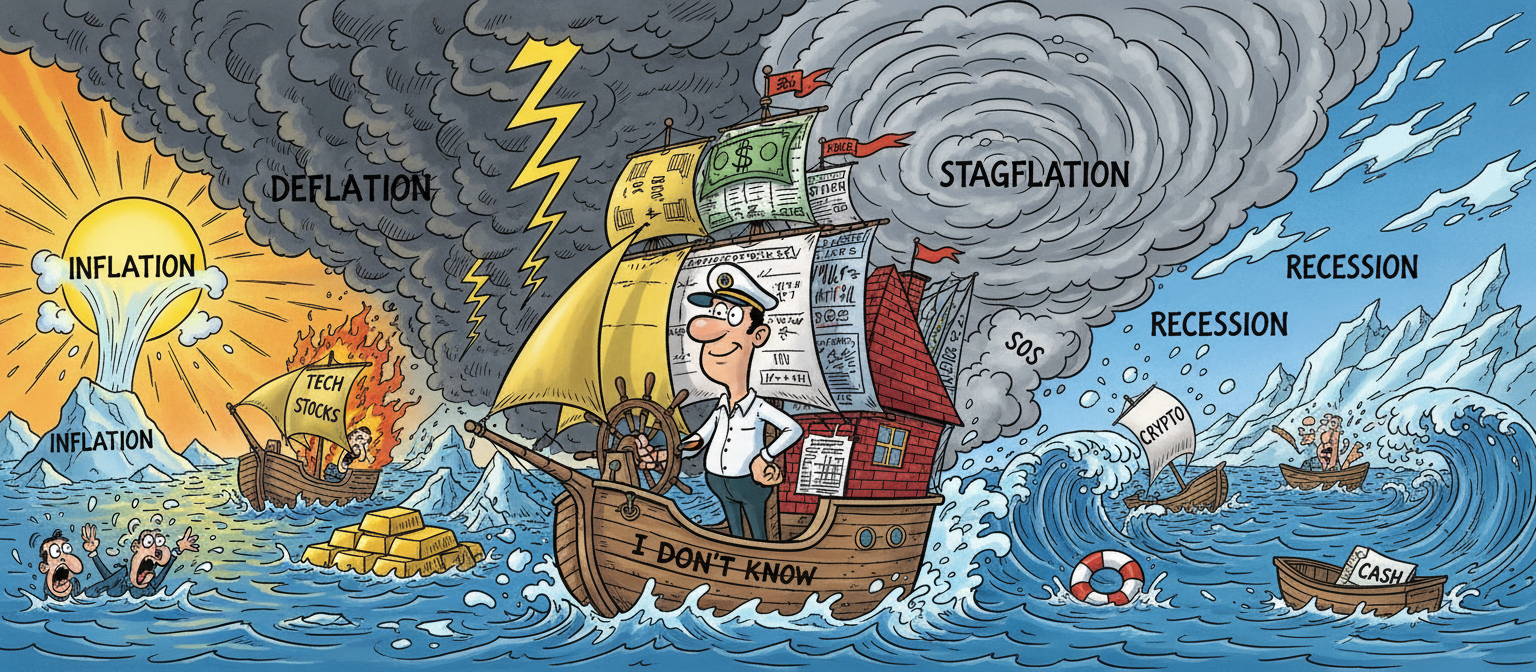
Most portfolios are built on a prediction. This one is built on admitting you don’t have one.
That’s uncomfortable for most investors. We’re conditioned to have a thesis. Bullish or bearish. Risk-on or risk-off. Inflation or deflation. Pick a side, build a portfolio around it, and hope you’re right.
But what if the honest answer is “I don’t know”? What if the macro crosscurrents are genuinely conflicting—AI threatening deflationary job displacement while government deficits scream inflation? What if the pundits contradicting each other on television are all partially right and partially wrong, and nobody actually knows how this resolves?
There’s a portfolio for that. And it’s about 500 years old.
The Merchant Who Outlasted Empires
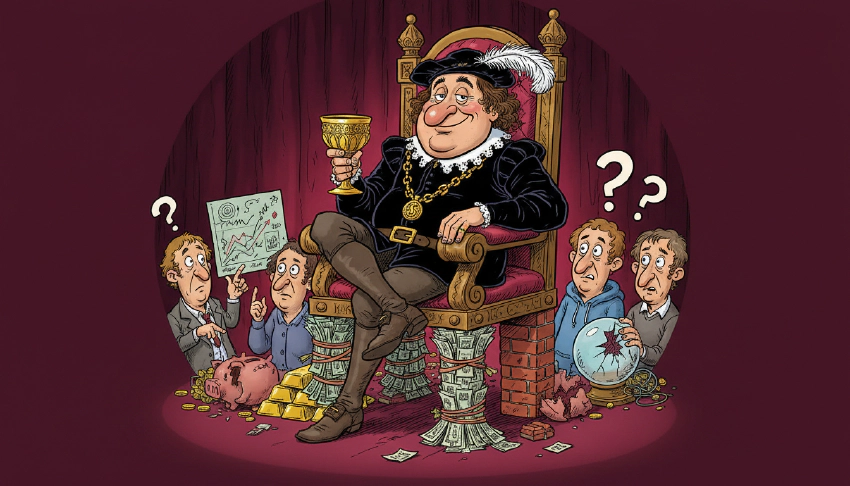
Jacob Fugger was the wealthiest man in Renaissance Europe. Born in 1459 in Augsburg, he built a financial empire that bankrolled the Habsburgs, financed wars, and survived the kind of political and economic chaos that would make today’s markets look tame.
His approach to wealth preservation wasn’t about predicting which way the winds would blow. It was about building a ship that could sail in any direction.
The framework attributed to him: hold 25% each in gold, equities, cash, and productive real estate. Four asset classes, equal weight, rebalanced periodically. Simple almost to the point of seeming naive.
But the logic underneath is anything but naive. It’s a systematic way to neutralize the two forces that destroy wealth: the currency losing purchasing power, and asset prices collapsing. Most portfolios protect against one or the other. This one protects against both—by accepting that you don’t know which one is coming.
The Four Pillars
Gold (25%): The asset with no counterparty. It’s no one else’s liability. It doesn’t default, doesn’t dilute, doesn’t depend on anyone else’s promise. When confidence in institutions wavers—whether through inflation eating away at currency or deflation triggering defaults—gold just sits there, doing nothing, which turns out to be exactly what you want.
Equities (25%): Ownership in productive businesses. Companies that make things, sell things, adjust prices, and generate earnings. In inflationary environments, businesses can raise prices. Over long periods, equities capture economic growth. They’re volatile in the short term but historically resilient over decades.
Cash (25%): Optionality. Dry powder. The ability to buy when others are forced to sell. Cash feels like a losing position when everything is going up, but it’s your parachute when everything comes down. It lets you be a buyer in a panic instead of a seller.
Productive Real Estate (25%): Tangible assets that generate income. Land, buildings, infrastructure. Things that produce rent or yield from actual economic activity. Real estate is illiquid and can be marked down during stress, but the underlying utility doesn’t disappear.
Stress-Testing the Structure
Here’s where the logic reveals itself. Let’s walk through how this portfolio behaves in different environments.
High Inflation Scenario:
Your cash loses purchasing power—that 25% erodes. That’s the bad news.
But your gold more than compensates. When currency weakens, gold tends to rise. Your equities also tend to perform well in inflationary periods—companies raise prices, earnings grow nominally, and stocks benefit. Real estate holds its own as a hard asset.
Net result: you take a hit on one quadrant, but three others offset it. You survive. You stay in the game.
Deflationary Scenario:
Now flip it. Economic contraction, falling prices, defaults rising.
Your equities get hurt—corporate earnings fall, stocks decline. Real estate also suffers as credit tightens and transactions freeze.
But your cash becomes extremely valuable. When prices fall, cash buys more. You can scoop up quality assets at distressed prices. And gold? Counterintuitively, gold does well in sustained deflation too—because deflation brings default risk. When banks wobble, when governments strain, when corporate debt looks shaky, the appeal of an asset that’s no one’s liability increases.
Net result: you take a hit on two quadrants, but the other two provide stability and opportunity. You survive. You stay in the game.
Everything In Between:
The beauty of this structure is that extreme scenarios are actually the easiest to analyze. What about muddle-through scenarios? Stagflation? Slow growth? Policy confusion?
This is where equal weighting works in your favor. You’re not overexposed to any single outcome. Your portfolio isn’t leveraged to a thesis. If inflation runs hotter than expected, you have gold and equities. If growth disappoints, you have cash and gold. If real assets outperform financial assets, you have real estate. If financial assets outperform real assets, you have equities and cash.
You don’t win big. But you don’t get knocked out.
The Modern Parallel: Harry Browne’s Permanent Portfolio
If this sounds familiar, it should. In the 1980s, investment advisor Harry Browne formalized a nearly identical approach: 25% stocks, 25% long-term government bonds, 25% gold, and 25% cash.
Browne’s version substituted bonds for real estate, making it easier to implement for retail investors. But the core philosophy was identical: stop trying to predict the future and build a portfolio that doesn’t require you to.
The Permanent Portfolio has been tracked for decades. It won’t top the charts in any given year. During the 1990s bull market, it lagged badly. During the 2008 financial crisis, it held up. Through various inflationary and deflationary scares, it did what it was designed to do: survived.
That’s not a sexy pitch. But survival is underrated.
Where Bitcoin Fits (Or Doesn’t)
A reasonable question: what about Bitcoin? Digital gold, finite supply, decentralized—shouldn’t it replace or complement the gold allocation?
Possibly. Eventually. But there’s a sequencing issue.
Right now, Bitcoin still trades like a high-beta technology stock. When risk assets sell off, Bitcoin tends to sell off harder. In March 2020, when COVID panic hit, Bitcoin dropped roughly 50% in days before recovering. It moves with speculative sentiment, not against it.
Gold doesn’t do that. Gold is boring. It goes up slowly, goes down slowly, and tends to move independently of equity market sentiment. That independence is precisely why it works as portfolio ballast.
Bitcoin may earn that status over time. As adoption grows, as volatility dampens, as it becomes more widely held by institutions, its correlation profile could shift. But for a portfolio designed around the premise of “I don’t know what’s coming,” relying on Bitcoin to behave like a safe haven when it hasn’t consistently done so seems like sneaking a prediction back in through the side door.
The Fugger approach would suggest: maybe hold some Bitcoin in your equity allocation if you’re bullish on it. But don’t count on it to play gold’s role until it consistently demonstrates gold’s behavior.
The Honest Weaknesses
No portfolio is perfect, and intellectual honesty requires acknowledging where this approach falls short.
Underperformance in strong bull markets. When stocks rip higher for years on end—as they did in the 2010s—holding 25% in gold and 25% in cash feels like dragging an anchor. You’ll lag your neighbors who went all-in on equities. You’ll question the approach. This is the cost of insurance.
Opportunity cost. Cash earning near-zero returns, gold generating no yield—half your portfolio produces no income. In a world of positive real rates and strong growth, that’s a drag on returns.
Rebalancing discipline. The portfolio only works if you actually rebalance. When stocks have crashed and gold has soared, you need to sell gold and buy stocks. That’s psychologically brutal. It means buying what’s hated and selling what’s loved. Most investors won’t do it.
Real estate illiquidity. Unlike stocks or gold ETFs, productive real estate doesn’t trade with a click. You can’t easily rebalance a property. REITs solve some of this but introduce their own complications.
These are real limitations. Anyone considering this approach should weigh them honestly.
The Case for Humility
The Fugger Portfolio isn’t for everyone. It’s not optimized for maximum returns. It won’t make you rich quick. It’s explicitly designed for investors who prioritize not getting knocked out over swinging for the fences.
There’s a certain personality type this appeals to: the person who looks at confident market predictions and thinks, “how can they be so sure?” The person who’s been around long enough to watch consensus get it wrong, repeatedly, in both directions.
The financial industry doesn’t love this approach. It’s hard to charge high fees for “buy four things in equal weight and rebalance once a year.” There’s no secret sauce, no proprietary algorithm, no complexity to justify active management fees.
But maybe that simplicity is the point. Jacob Fugger didn’t know what the 16th century would bring. He couldn’t predict wars, plagues, or which kingdoms would rise and fall. But he structured his wealth to survive regardless. Five centuries later, the same uncertainty persists—and so does the same logic.
Most portfolios are built on a prediction. This one is built on admitting you don’t have one.