The World's Most Expensive Parking Lot
The headlines screaming across social media over the weekend were breathless. After the USA conducted airstrikes and captured Venezuelan President Nicolás Maduro, President Trump stood at Mar-a-Lago and made his intentions clear:
“We’re going to have our very large United States oil companies—the biggest anywhere in the world—go in, spend billions of dollars, fix the badly broken infrastructure, the oil infrastructure, and start making money for the country.”
The enthusiasm online was immediate. Venezuela has 303 billion barrels of proven oil reserves—the largest in the world. Quick multiplication ensued: at roughly $60 per barrel, that’s $18 trillion in oil. Even at half that value, commentators excitedly noted, you’re talking about more than Japan’s entire GDP.
Here’s what most people actually don’t realize: oil in the ground isn’t fungible.
Oil barrels are. Oil reserves? Not even close.
The difference between those two things is about to cost someone a staggering amount of money.
What Venezuela’s Oil Actually Is
Let me be precise about what Venezuela’s oil actually is.
Roughly 70-80% of those 303 billion barrels sit in the Orinoco Belt—a vast region holding what the industry politely calls “extra-heavy crude.” That’s a technical term for tar. We’re talking about oil with an API gravity of 5-15 degrees (lighter oil is 30-40 degrees), sulfur content of 4-6%, and viscosity so high it barely flows at room temperature.
This isn’t the light, sweet crude that gushes out of Saudi wells and can be refined in any reasonably equipped facility. Venezuelan heavy crude requires steam injection just to get it to the surface, blending with lighter crude (diluent) to make it transportable through pipelines, specialized refining processes to remove sulfur and other impurities, and infrastructure designed specifically for handling this grade of sludge.
And here’s the financial reality that the “$18 trillion” crowd conveniently ignores: Venezuelan heavy crude doesn’t sell for $60 per barrel. It sells at a discount to Brent benchmark prices. A significant discount.
Recent data shows Venezuela’s Merey blend trading at discounts of $15-25 below Brent. So while the viral narrative is multiplying 303 billion barrels by $60, the actual market price for what Venezuela produces is closer to $35-45 per barrel.
Already the math is getting uncomfortable.
The Kitchen Table Calculation Nobody’s Running
Strip away the hype and let’s run the numbers on what it actually takes to get Venezuelan oil flowing.
Francisco Monaldi, director of the Latin America energy program at Rice University, estimates it would require more than $100 billion in investment and at least a decade to rebuild Venezuela’s oil infrastructure and lift production to 4 million barrels per day.
Let that sink in for a moment. $100 billion. Ten years.
Venezuela’s oil infrastructure isn’t just old—it’s Soviet-era equipment that’s been catastrophically neglected for two decades. Current production sits at roughly 1 million barrels per day, down from 3.5 million in the 1990s before Chavez nationalized everything and began the slow destruction of institutional capacity.
So let’s do the kitchen table math on what a hypothetical U.S. oil company would face:
Capital Investment Required: $100+ billion (minimum)
Production Costs: Historical estimates ranged from $16-22/barrel breakeven, but that was when infrastructure actually worked. Add in the cost of diluent, specialized refining, and operating in a country with zero institutional capacity, and you’re easily looking at $25-30/barrel in ongoing costs.
Gross Profit per Barrel: Maybe $10-15 if you’re lucky at today’s prices
Oil prices could rise or fall, but even at higher prices, the operational challenges remain: production must ramp to 4 million barrels/day smoothly (it won’t), operating costs can’t balloon (they will), no additional capital expenditures beyond the initial $100 billion can be needed (laughable), and political stability must materialize in Venezuela (even more laughable).
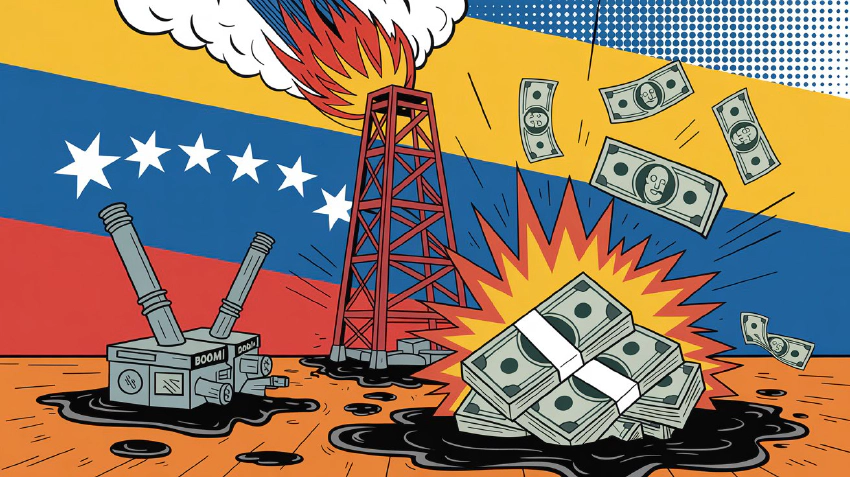
This isn’t an investment. It’s a capital trap wrapped in geopolitical chaos.
Oil Markets Don’t Price Reserves in the Ground
Venezuela currently produces about 1 million barrels per day—roughly 1% of global crude production. Even tripling that output over a decade would only add 2-3% to global supply. These barrels have been missing for years already, and the market has adjusted.
Oil futures barely moved when markets opened. Why? Because traders understand something the viral narrative apparently doesn’t: you can’t just multiply total reserves by spot price and declare victory.
The Contracts, Obligations, and Reality Nobody Mentions
Even if we ignore the catastrophic economics, there’s a minor detail the “$18 trillion” narrative glosses over: Venezuela’s oil is already wrapped in layers of legal, commercial, and diplomatic obligations that would take years to unwind.
You can’t just show up with airstrikes, declare “we run this now,” and start pumping oil to Houston next week. Long-term supply contracts with China and other buyers don’t disappear. Joint venture agreements with international oil companies still exist. OPEC production quotas remain binding. Every single one of those layers requires negotiation, litigation, and restructuring before a single extra dollar can be realized.
The Historical Parallel Nobody Wants to Discuss
Iraq had the world’s fifth-largest oil reserves when the USA toppled Saddam Hussein in 2003. Deputy Defense Secretary Paul Wolfowitz told Congress that Iraqi oil revenues “could bring between $50 and $100 billion over the course of the next two or three years” and that Iraq could “really finance its own reconstruction, and relatively soon.”
Twenty years later, how’d that work out?
Initial reconstruction estimates: $56 billion over four years. Actual spending: over $220 billion. Iraqi oil production still struggles to exceed pre-war levels. Many reconstruction projects were never completed or immediately fell into disrepair. Despite 145 billion barrels of reserves, Iraq’s oil sector became a cautionary tale about the gap between reserves on paper and profitable production in reality.
Venezuela faces all the same challenges, with the added bonus that its oil is significantly harder and more expensive to extract than Iraq’s conventional crude.
This isn’t the first time someone looked at massive oil reserves in a troubled country and did simple multiplication to arrive at an exciting number. It’s just the latest iteration of the same mistake.
What This Actually Means
Strip away the viral posts and financial illiteracy, and here’s the actual situation:
The USA conducted a military operation to remove a dictator sitting on the world’s largest oil reserves. Those reserves are real. The oil exists. But the difference between “oil in the ground” and “profitable oil production” is measured in hundreds of billions of dollars and decades of work.
At current oil prices, with heavy crude discounts, and realistic extraction costs, the math for private companies is brutal. The only way this pencils out is if:
- Oil prices spike significantly above current levels and stay there for decades
- Someone develops breakthrough technology to extract heavy crude at drastically lower costs
- The USA essentially subsidizes the operation as a strategic priority regardless of return on investment
None of those scenarios deliver the riches the narrative promises.
The Bottom Line
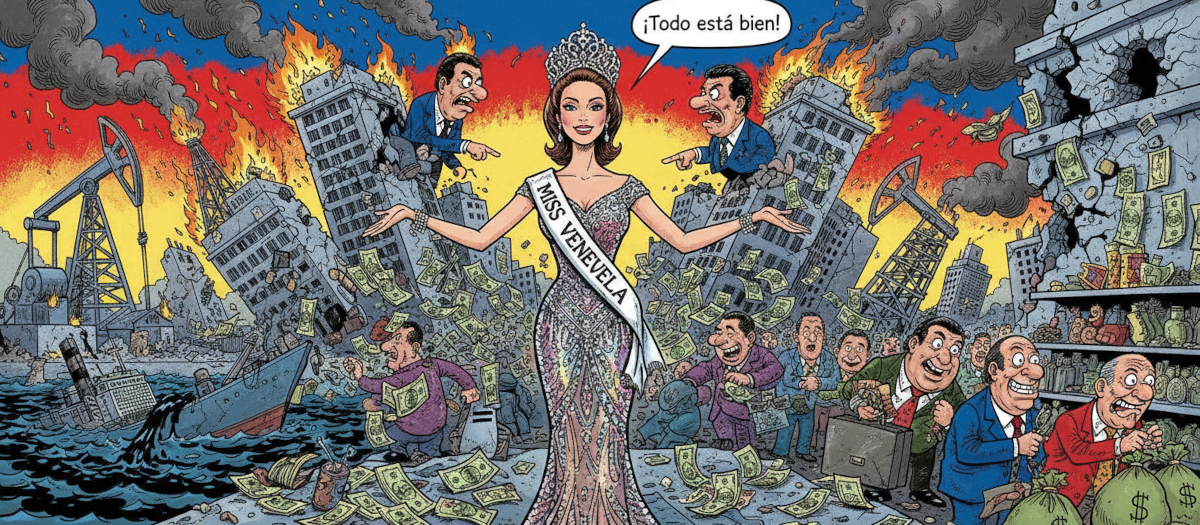
Venezuela’s oil reserves are parked in the worst possible extraction conditions, requiring the most expensive technology, producing the lowest-quality product, selling at the steepest discounts, in a country with destroyed infrastructure and no institutional capacity.
It’s like owning a gold mine where the gold is mixed with concrete at the bottom of the ocean. Sure, technically it’s there. You could extract it. But the cost of extraction might exceed the value of what you pull out.
Markets don’t price oil in the ground. They price what hits the market each day. And until someone figures out how to profitably extract Venezuelan heavy crude at scale—a challenge that has defeated everyone who’s tried for two decades—those 303 billion barrels might as well be on Mars.
The world’s largest oil reserve just met the world’s worst extraction economics. This isn’t a $18 trillion windfall. It’s a $100 billion capital trap—if everything goes perfectly.
And in Venezuela, when has anything ever gone perfectly?